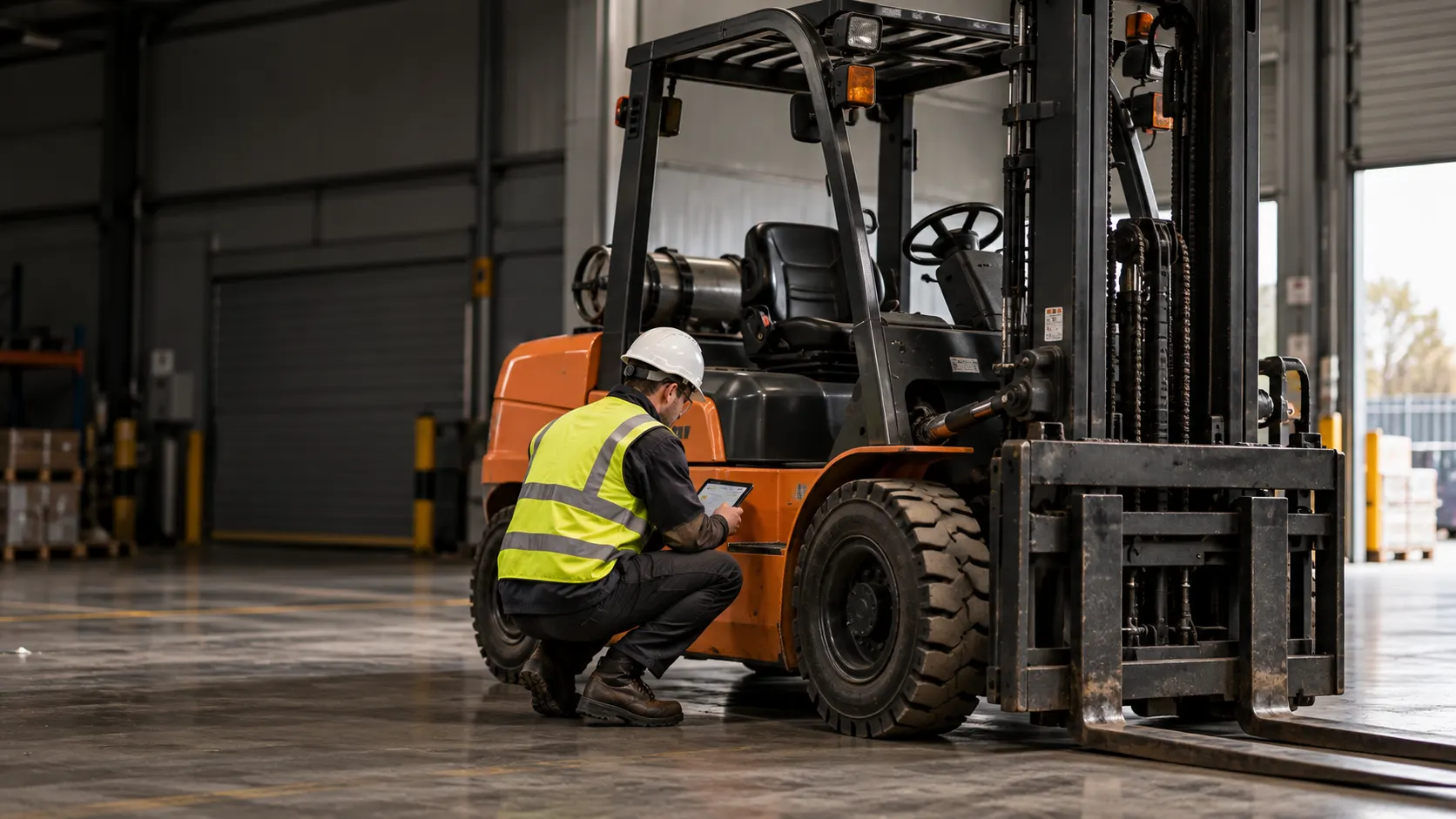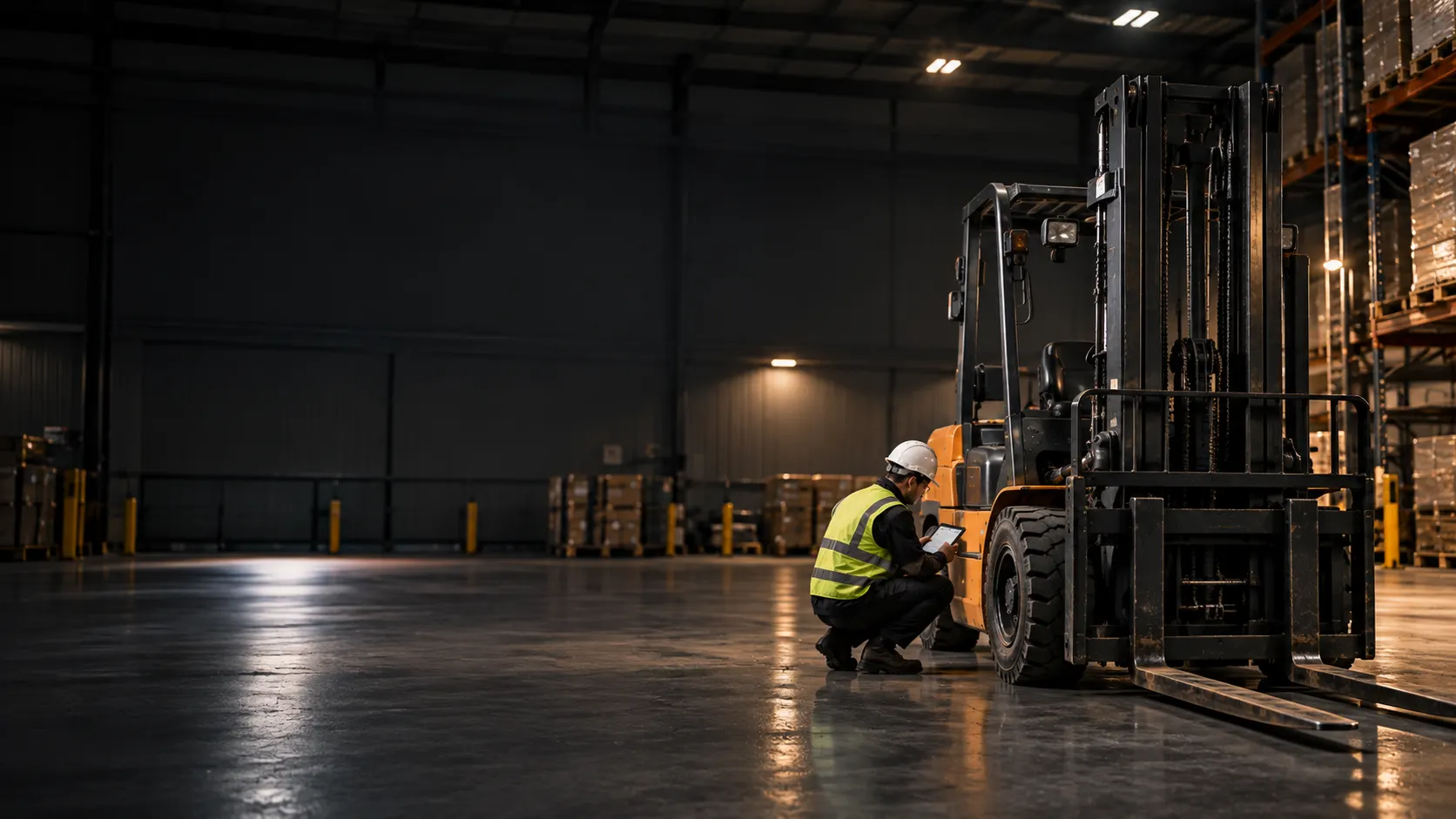
Forklift Trucks
Counterbalance and other applicable forklift trucks used for lifting and moving loads.
Tell us what equipment you have, where it is located and when it was last examined and we can discuss the appropriate inspection requirements.
A forklift inspection assesses the condition of the equipment and the components that affect its safe lifting and operation.
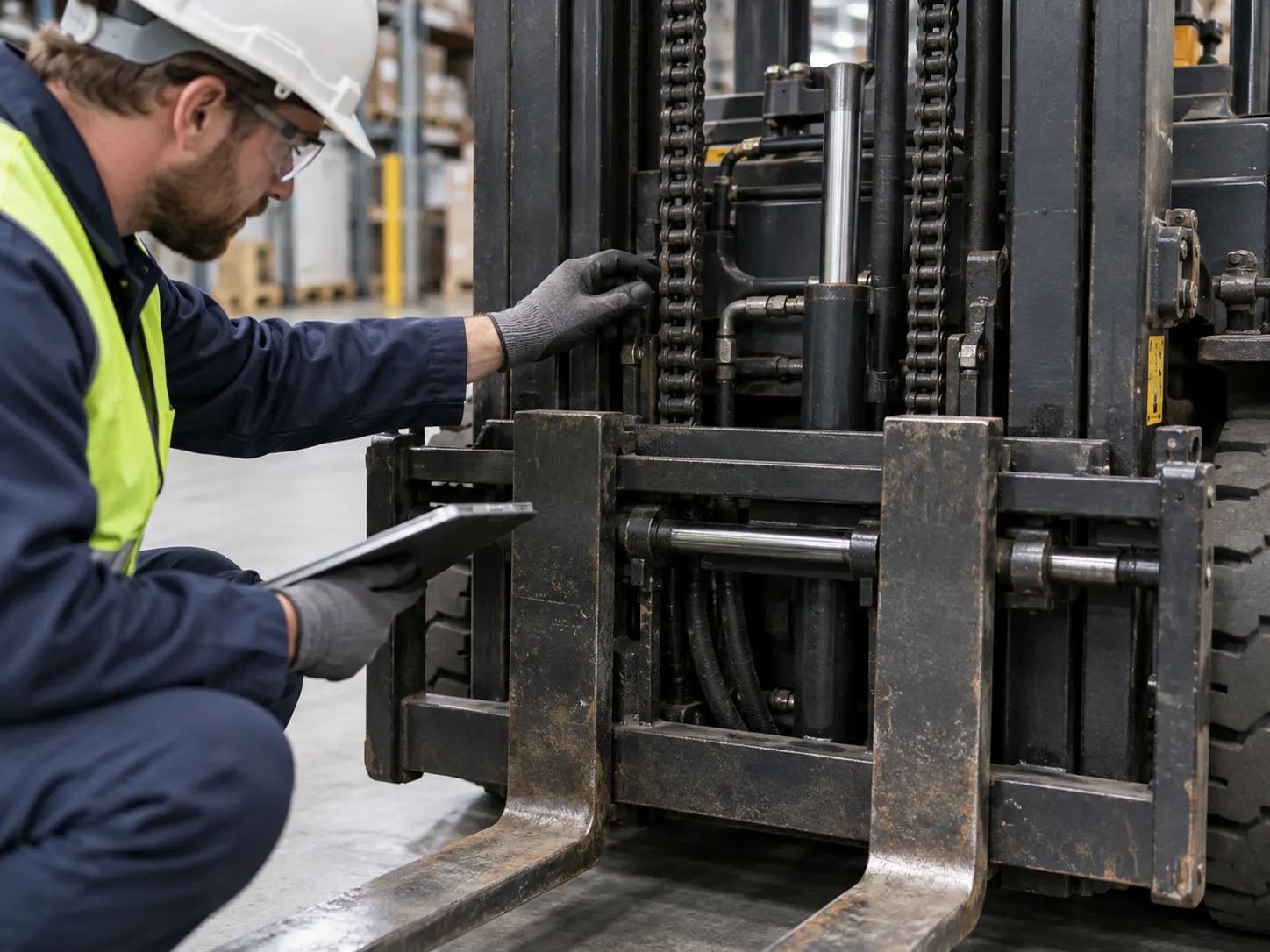
For lift trucks covered by LOLER, the thorough examination can include items such as the forks, lifting chains, mast and cylinders, together with applicable lifting attachments. Wider safety-related components are considered under PUWER requirements.
The scope depends on the equipment, how it is used and the inspection requirements that apply. Our focus is on identifying defects or deterioration clearly and providing straightforward documentation of the findings.
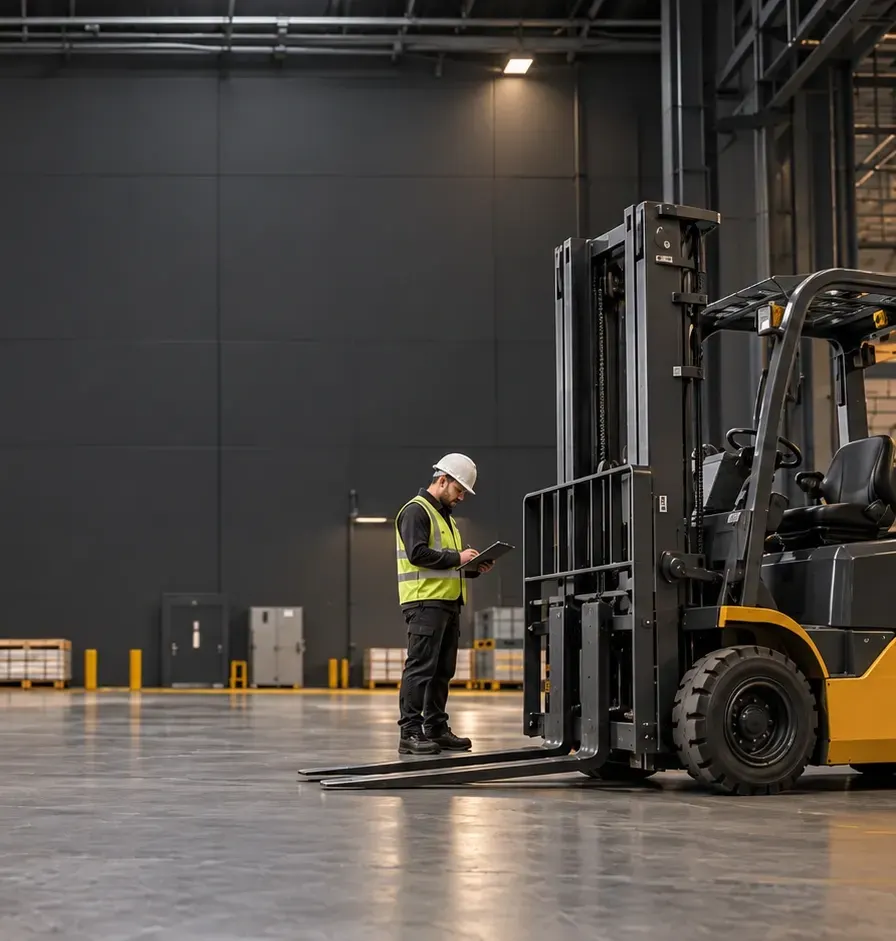
We inspect a range of forklifts, telehandlers and materials-handling equipment used across warehouses, workshops, industrial sites and commercial environments.
Counterbalance and other applicable forklift trucks used for lifting and moving loads.
Telescopic handlers used across construction, industrial and materials-handling environments.
Pedestrian-operated lifting equipment and stackers used within warehouses and commercial premises.
Manual and powered pallet trucks capable of raising loads above normal low-level handling heights.
Applicable powered materials-handling equipment where lifting and inspection requirements apply.
Fork extensions, lifting attachments and other applicable equipment used with lift trucks.
Provide the truck or telehandler type, location and any available inspection or maintenance history.
We review the equipment information and establish the appropriate LOLER, PUWER or combined inspection requirement.
Relevant lifting and safety-related components are examined for condition, deterioration and defects.
You receive written documentation recording the examination, findings and any action that may be required.
For forklift lifting equipment covered by LOLER, thorough examination is commonly required at least every 12 months, unless a competent person specifies a different interval through a written scheme of examination.
HSE specifically identifies the lifting chains, forks, mast and cylinders and applicable fork attachments as items subject to thorough examination.
Where a forklift or other lifting machine is used to lift people, different examination intervals can apply. Equipment used to lift people must generally be thoroughly examined every 6 months, unless an examination scheme specifies otherwise.
Tell us what equipment you operate, how it is used and where it is located. We can discuss whether LOLER, PUWER or both sets of requirements are relevant and help arrange the appropriate inspection.
LOLER and PUWER cover different aspects of forklift safety, which is why the same truck can fall within both sets of requirements.
LOLER focuses on the parts involved in lifting and lowering loads, including components such as forks, chains, the mast and lifting mechanism.
PUWER applies more broadly to the safety and suitability of the work equipment, including areas such as brakes, steering, tyres and other safety-related systems.
The two therefore complement each other rather than representing the same inspection. HSE makes this distinction specifically for industrial lift trucks.